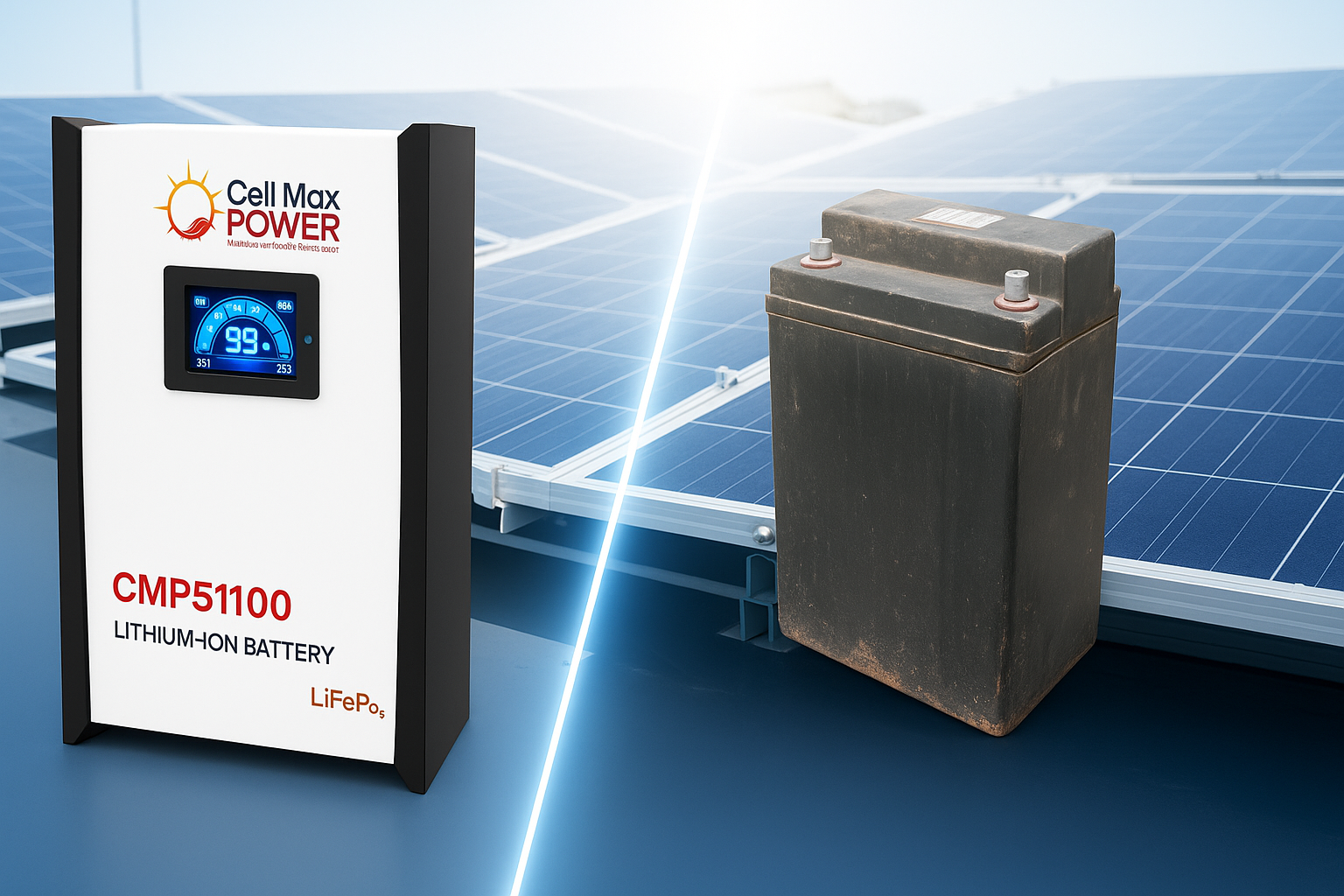
As solar energy becomes the top choice for Pakistani homes and businesses, one question keeps coming up:
Which battery is better—lithium or lead-acid?
Your solar system is only as strong as the battery backing it. A weak battery means poor backup, low efficiency, and high maintenance. A strong battery means long-term savings, reliability, and peace of mind.
In this blog, we’ll compare lithium batteries vs. old lead-acid batteries, and explain why modern LiFePO₄ batteries—especially Cell Max Power—are the superior choice for today’s solar users.
1. Battery Comparison: Old vs. New Technology
Lead-Acid Batteries (Old Technology)
These traditional batteries have been used for decades in UPS and automotive setups. They work—but they come with limitations:
- Heavy and bulky
- Lower backup efficiency
- Require frequent water topping
- Short lifespan
- Slow charging
Lithium (LiFePO₄) Batteries (Modern Technology)
Lithium solar batteries represent the new generation of clean energy storage:
- Lightweight and compact
- High backup efficiency
- Zero maintenance
- Long lifespan
- Fast charging and discharging
Lithium batteries are engineered for high-performance solar systems—especially in Pakistan where load shedding is unpredictable.
2. Maintenance Differences: The Deciding Factor
Lead-Acid Battery Maintenance
Lead-acid systems demand regular care:
- Monthly distilled water refilling
- Cleaning terminals
- Checking acid levels
- Risk of leakage or corrosion
- Performance drops with heat
For busy homeowners, this becomes a constant hassle.
LiFePO₄ Battery Maintenance
LiFePO₄ batteries are completely maintenance-free:
- No water topping
- No acid spills
- No corrosion
- Long-term stable performance
Install it once—and forget about it for years.
3. Life Cycles: How Long Do They Last?
Lead-Acid Battery Lifespan
Average: 300–500 cycles
This usually means 1.5–2.5 years of usable life.
LiFePO₄ Battery Lifespan
Average: 3,000–6,000 cycles
This equals 8–12+ years of reliable backup.
That’s up to 10 times longer than a typical lead-acid battery.
4. Efficiency: Backup Time & Performance
Lead-Acid Efficiency
- Only 50% usable capacity
- Loses efficiency over time
- Slow charging during cloudy days
- Voltage drops quickly under load
This means you never get full backup performance.
LiFePO₄ Efficiency
- 95% usable capacity
- Consistent performance for years
- Fast charging even in low sunlight
- Strong, stable output for all appliances
LiFePO₄ gives you more energy, more reliability, and more savings.
5. Why LiFePO₄ Batteries Like Cell Max Power Are Superior
Cell Max Power LiFePO₄ batteries are designed specifically for Pakistan’s conditions—heat, load shedding, and high solar usage. Here’s why they stand out:
- 🔋 Ultra-long life cycle (up to 6,000 cycles)
- 🌡️ High temperature resistance
- ⚡ Fast charging for solar efficiency
- 🔒 Built-in BMS for safety & performance
- 💡 Lightweight, compact design
- 💰 Lower long-term cost compared to lead-acid
- 🔌 Stable backup for homes, offices, and industries
Whether you choose a 200Ah, 100Ah, or higher KWh system, Cell Max Power batteries offer unmatched value and reliability.
Conclusion: Lithium Wins—Every Time
When comparing both technologies, the results are clear:
| Feature | Lead-Acid | Lithium LiFePO₄ |
|---|---|---|
| Lifespan | Short | Very long |
| Efficiency | Low | High |
| Maintenance | High | Zero |
| Safety | Moderate | Excellent |
| Cost Over Time | High | Low |
For anyone installing a new solar system—or upgrading an old battery—Lithium LiFePO₄ is the best choice for performance, safety, and long-term savings.
If you’re looking for the best solar lithium battery in Pakistan, Cell Max Power LiFePO₄ solutions deliver top-grade reliability and backup power for every home.


Leave a comment